
This week, I’m taking you on a tour to visit Utah Beach region, the east coast of the Cotentin Peninsula, which is home to many hidden gems! I discovered this windswept coastline a few weeks ago and I must say that I was pleasantly surprised at every turn.
From the Gatteville lighthouse to the superb D-day landing beaches, here are five must-see places to discover the beautiful Utah Beach region! You’ll also find a complete guide to visit Utah Beach!
Quick highlights you’ll find in this guide about visiting Utah Beach:
- Visit Utah Beach: D-Day landing beach, D-Day Museum, and the surrounding historic sites
- Practical tips: how to get there, where to stay, and how to organize your time
- Must-see landmarks: Gatteville Lighthouse, Barfleur village, Fort de la Hougue
- Highlights of the region: windswept coastline, hidden gems, and historical insights
- Other things to do around Utah Beach for a complete Normandy experience
PRACTICAL TIPS TO VISIT UTAH BEACH REGION
How to get there?
The central point of the region is the city of Cherbourg. The road trip starts in Gatteville, 30 minutes away, and ends at Utah Beach, 40 minutes from Cherbourg.
– If you are coming by car, it takes 3 hours and 40 minutes from Paris, 2 hours and 20 minutes from Rennes, and 1 hour and 20 minutes from Caen.
– By train, the Paris Saint-Lazare – Cherbourg journey takes 3 hours and 50 minutes and 1 hour and 50 minutes from Caen. The best option is to rent a car to access all the sites and enjoy more freedom. Bus journeys are much longer and less frequent, especially at weekends. Rent a car here if you need to.
– The nearest airport is Caen, with flights to major French cities.
Compare car rentals to find the best price!
Where to stay to visit Utah Beach region?
Here are several accommodation suggestions located near Utah Beach. It is home to some very pretty guesthouses, nestled in charming locations. If you are on a tighter budget, don’t hesitate to look for accommodation in Cherbourg, which offers very affordable prices and remains centrally located.
3 recommended accommodations to visit Utah Beach region

LE MANOIR DE SAVIGNY
- In Valognes, beautiful setting
- Historical house
- From 120€

LE CHALET SUISSE
- Close to Barfleur
- With a beautiful garden
- From 90€
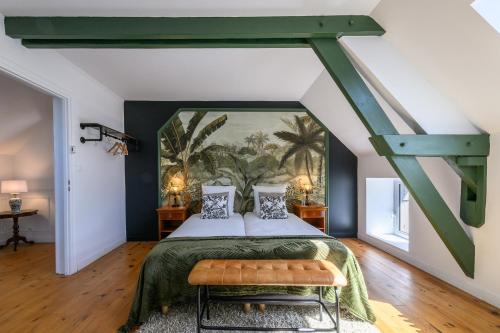
LES 13 LAVOIRS D’ANTAN
- Charming B&B
- Rated 9,4 out of 10
- From 105€
Organize your time to visit Utah Beach region
You can easily stay in the region for the weekend! To enjoy the five must-see attractions on the east coast of the Cotentin, allow a full day! The distances between each place are quite short.
The Gatteville lighthouse is eight minutes from Barfleur, then it’s 20 minutes to Fort Saint Vaast. Finally, allow 35 minutes between Saint Vaast and Utah Beach. There are several pretty beaches along the way.
VISIT UTAH BEACH, THE FAMOUS D-DAY BEACH
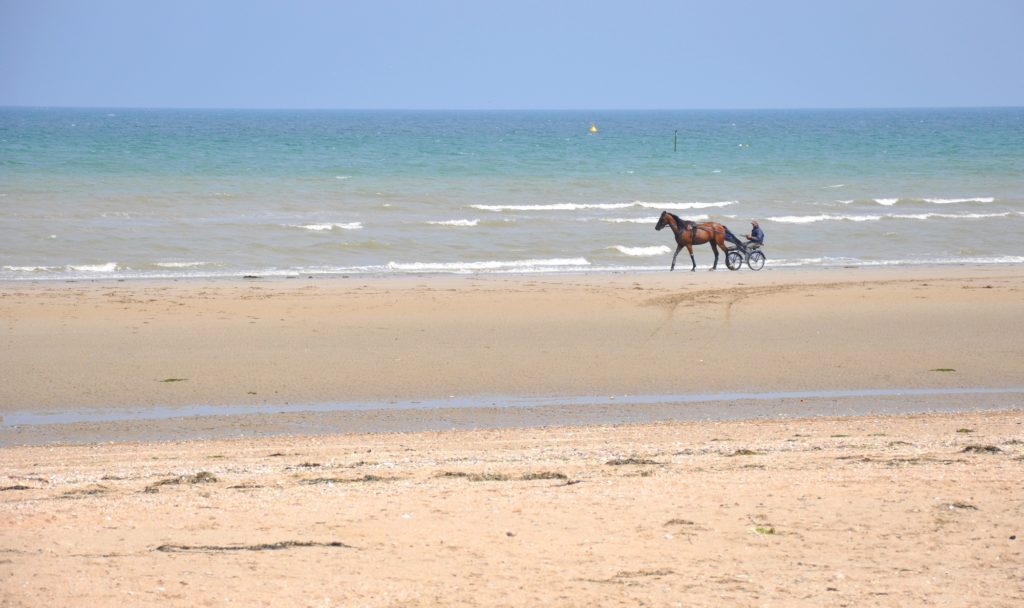
I must admit that I wasn’t expecting this kind of beach when I came to the English Channel! The light-colored sand, which turns golden in the sun, is so fine! These wide open spaces are a real change of scenery, especially since the beaches are deserted as soon as you take a few steps. The feeling of freedom that comes with being by the sea returns.
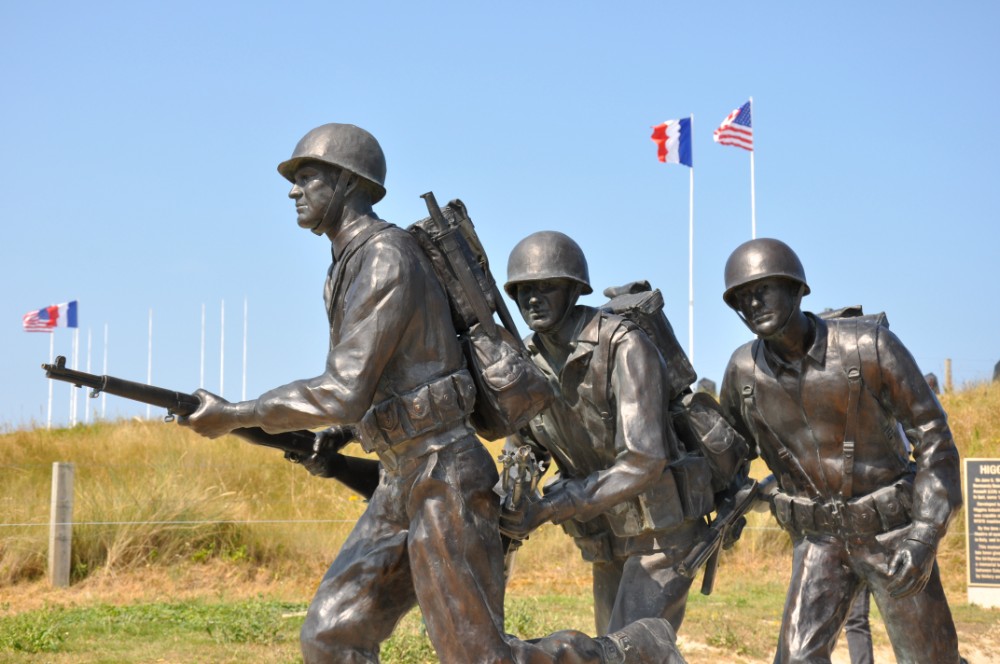
Here, this feeling is heightened by history, when you remember what happened on these beaches nearly 75 years ago. These are the D-Day beaches. The American and British flags flying everywhere along the coastline are there to remind us of this. On this coastline, the beaches were the scene of an incredibly perilous but victorious operation that helped change the course of the war and world history…

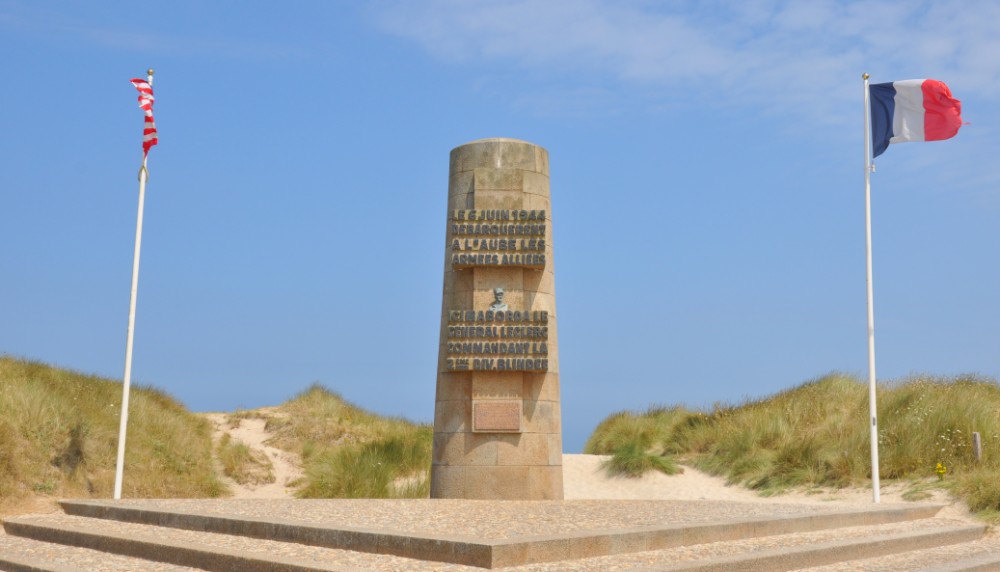
VISIT UTAH BEACH AND THE D-DAY MUSEUM
Discover Utah Beach museum
For me, this museum is one of the most beautiful sites to visit Utah Beach region. I found the visit to the Utah Beach D-Day Museum extremely interesting and, above all, poignant. And I wasn’t the only one! It was clear that young and old alike were moved by the testimonies shared throughout the visit.
The museum really helps you understand what happened on that famous day, June 6, 1944. How the Allied soldiers prepared, how they fought. You discover the faces of these men and women, war heroes, heroes of the resistance that had organized in France.
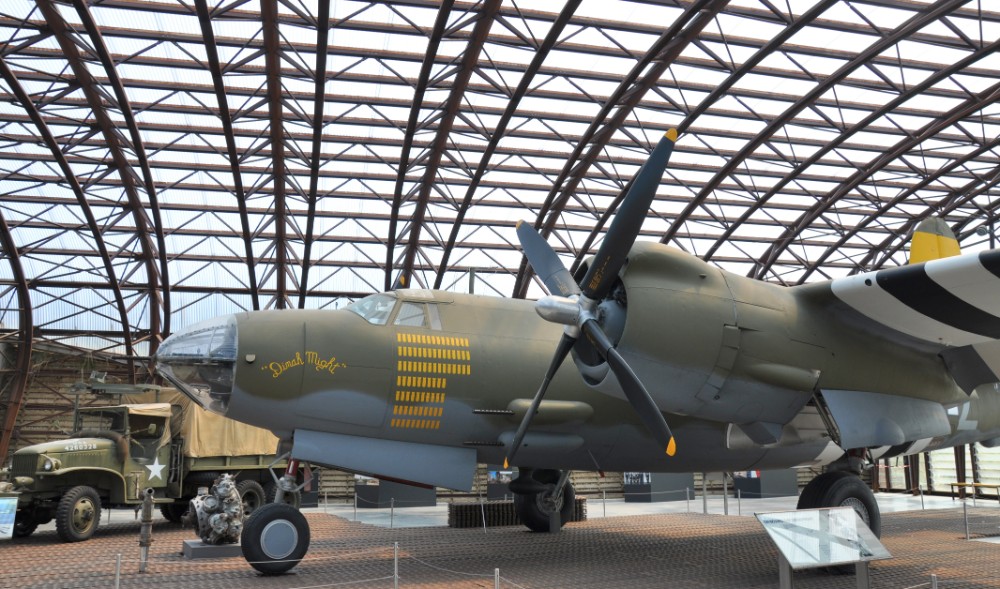
The exhibits are varied: uniforms, vehicles, photos, letters, maps… We learn, for example, that 16,000 carrier pigeons were released by the Allies to the French population to gather valuable information!
The tour then continues outside, on the sandy beach that seems to have never known such bloody times.


A few words of History
A fascinating film also explains the preparation and execution of Operation Overlord and the landings in a precise and truly breathtaking manner. I must admit that although the date of June 6, 1944, has been engraved in my memory from history lessons, the events and what was at stake seemed very distant in my mind!
It was the largest amphibious operation in history, known as “Operation Overlord.” The joint operation was extremely risky and had almost every chance of failing. Its objective was to land a military force capable of defeating the German army in the shortest possible time through the coordination of naval, ground, and air forces.
On the first day of the assault, 150,000 men had to set foot on land to pave the way for nearly three million soldiers. In the Cotentin Peninsula, 15,000 men landed by sea. To do so, they had to sail along the coast at night, without being spotted by the enemy and while avoiding underwater mines.
Once ashore, facing German soldiers defending the coast, they also had to cross miles of land flooded by the Germans to make the interior impenetrable. The area had been secured by some 13,000 paratroopers dropped earlier that night.
Even today, you can still feel that on that day at Utah Beach, World War II took a turn and the face of the world changed.
Practical information – Utah Beach landing museum website: open from 10:00 a.m. to 6:00 p.m. (9:30 a.m. to 7:00 p.m. in summer) – admission: €8 and €4 for children under 15

CLIMB TO THE TOP OF THE GATTEVILLE LIGHTHOUSE, THE 2ND TALLEST IN EUROPE!
The east coast of the Cotentin is home to the second tallest lighthouse in Europe! Located at the tip of Barfleur, the Gatteville lighthouse stands at 72 meters! However, you will have to climb 365 steps before you can enjoy the breathtaking view from the top. On the way up, you will discover 52 viewpoints through the windows, as many as there are weeks in the year!
The view from the top is splendid, with the English Channel stretching as far as the eye can see. We are at the northeastern tip of the Cotentin Peninsula and you can see far, far away! On the landward side, you can make out the bays of Barfleur and Gatteville. For me, this is one of the most beautiful places in the Cotentin!


As an aside, many people think that the main function of lighthouses was to signal danger and that today they are merely decorative. In fact, they have a much more important role!
Their height and nighttime light signals allow sailors to find their bearings, especially in bad weather! When sailing, you determine the position of the boat by studying its relative position in relation to various “landmarks,” i.e., fixed reference points. These include lighthouses, signal beacons (non-mobile), radar antennas, and so on.
Because, although all boats are now equipped with GPS, these devices are not infallible and, above all, they depend on an American system. A geopolitical cooling and all ships are affected! Every sailor must therefore know how to navigate using a map, which makes lighthouses very important!
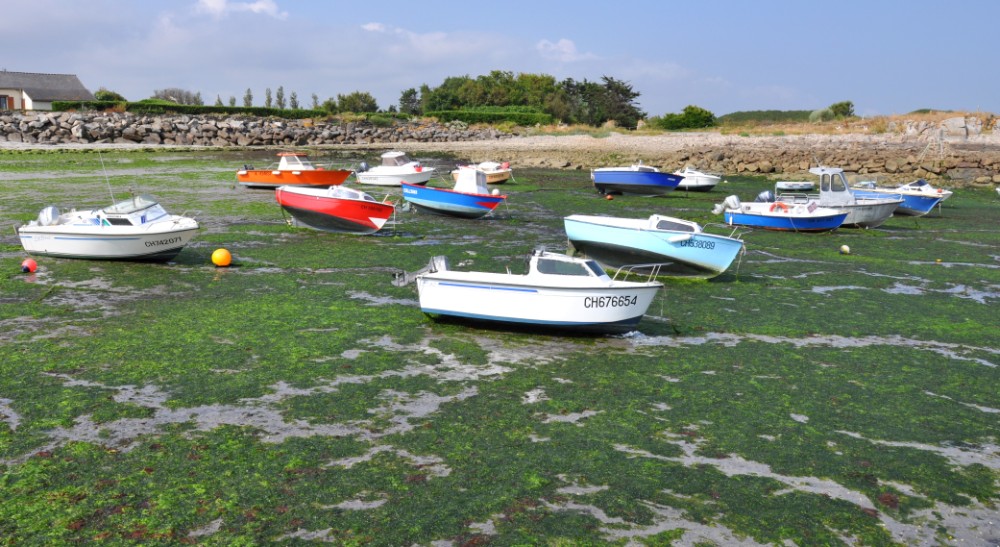
At the foot of the lighthouse, you can also stop at the small port of Gatteville. At low tide, the sight of boats sitting among the seaweed is adorable!
Practical information – Gatteville Lighthouse: open from 10:00 a.m. to 12:00 p.m. and from 2:00 p.m. to 6:00 p.m. (closing times vary depending on the season), closed in case of stormy weather or strong winds, and in winter – admission: €3

VISIT BARFLEUR, THE CHARMING VILLAGE
The Utah Beach region is dotted with pretty gray stone villages, often complete with a small port and a church in the center.
Barfleur is undoubtedly the prettiest village on the east coast: it is also listed among the “most beautiful villages in France”. The village is very charming and you will see houses with beautifully flowered terraces. In summer, the hydrangeas that literally invade the region enhance the color of the gray stone.
The port of Barfleur is undoubtedly the most charming spot in the village. Located on a cove, it is lined with pretty stone houses. At low tide, the colorful boats seem to be stranded in the middle of the port, creating a stunning sight. It is hard to imagine today that this small port was much more important in the Middle Ages! It was even here that the Anglo-Norman kings embarked for England. The only medieval house in the village can be found in the Cour Sainte Catherine, right next to the port.
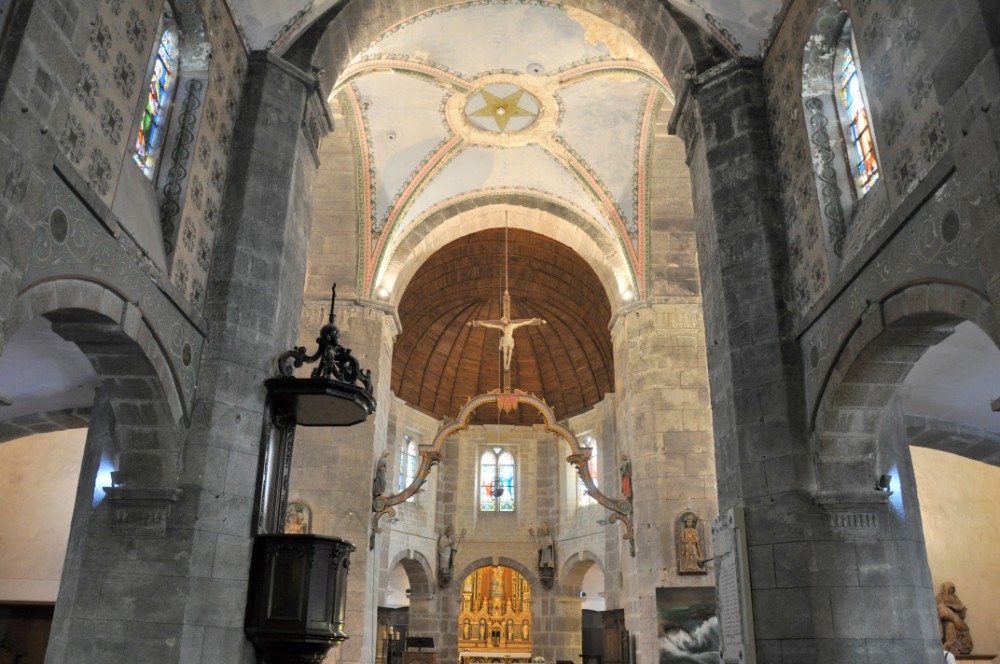
Also worth seeing is the beautiful stone church with a boat hanging in the middle of the choir. Here, the sea is never far away!




DISCOVER THE FORT DE LA HOUGUE
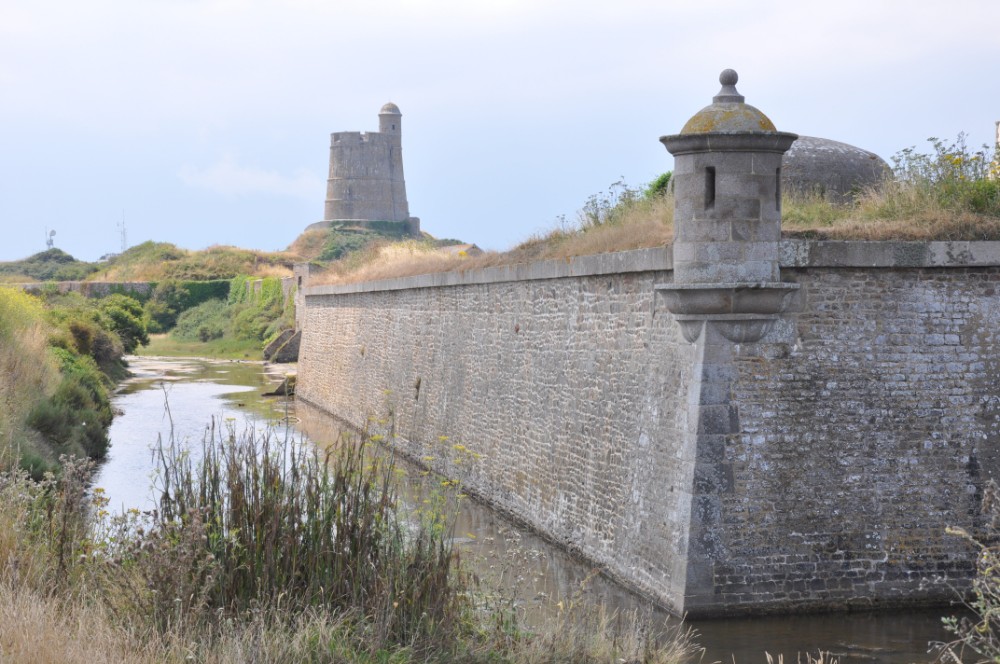
The Fort de la Hougue is one of many places fortified by Vauban. This brilliant architect also designed the citadel on the tiny island of Tatihou, off the coast of Saint Vaast. When Vauban arrived in the region at the end of the 17th century, he noticed that the east coast of the Cotentin was completely unprotected and decided to build defensive structures there.
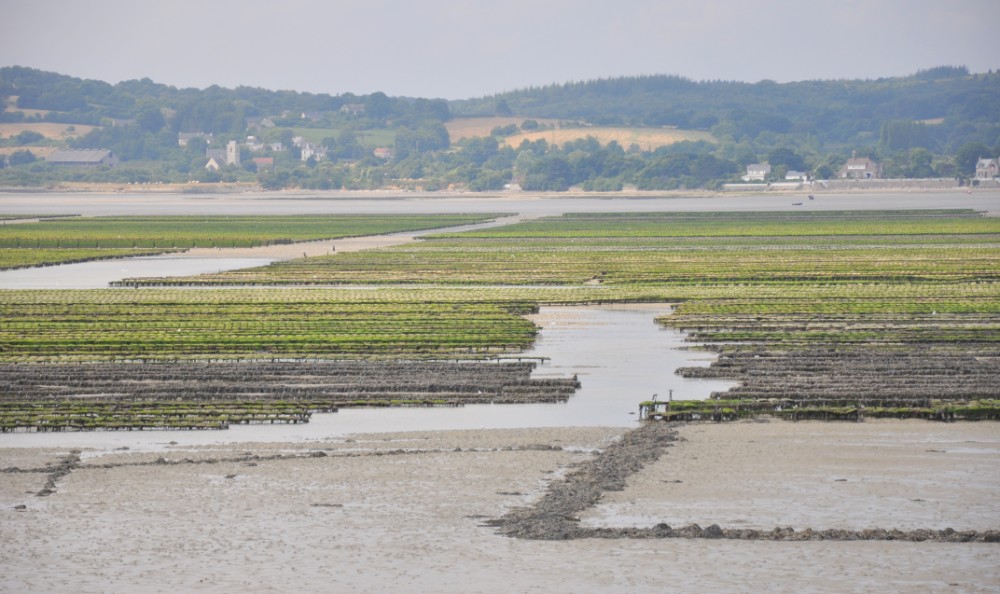
The fort is located at the end of La Hougue, connected to Saint Vaast by a narrow strip of land. Surrounded by the beach on one side and oyster farms on the other, the tower seems to be bathed in the English Channel. It is one of the many places on the east coast of the Cotentin where you feel like you are alone in the world!
It is possible to visit the interior of the Hougue tower, but the path around it is also very pleasant. You can discover the ramparts and fortifications which, seen from the sky, resemble the branches of stars. On the south side, the path even allows you to walk on the defensive wall surrounding the main tower.
If you have time, you can also take a trip to Tatihou Island (see the “Practical information – exploring the surrounding area” section).
Practical information – Fort de la Hougue – open on weekends and public holidays from 1:00 p.m. to 6:30 p.m. (every day until 7:00 p.m. in summer) – admission: €5 per adult. You can also tour the fortifications free of charge



OTHER SITES TO VISIT UTAH BEACH REGION
Extend your stay in the Cotentin and check out my other articles to visit Utah Beach region: The Côte des Havres in 3 favorite spots and Road trip on the Route des Caps de la Manche
– Tatihou Island (in Saint Vaast): from Saint Vaast, you can take a boat to the tiny island of Tatihou, which has been open to the public since 1992. It is home to pretty little houses typical of the region, as well as a maritime museum and the Vauban Tower and fortifications, which are listed as World Heritage Sites.
– Valognes (20 minutes from Saint Vaast): this village, nicknamed “the little Norman Versailles,” offers an incredible wealth of history. Its ruined thermal baths are the remains of the ancient Roman city. The town is also home to some beautiful mansions and numerous churches and abbeys steeped in history.
– Omaha Beach (40 minutes from Utah Beach): east of Utah Beach, you can visit the other D-Day beaches, including Omaha Beach in the Calvados department. It is famous for its cemetery, which is the final resting place of 5,000 soldiers who died for freedom.
– Caen (50 min away) : Caen is a refreshing getaway, where history, the sea, the Normandy landings, sea air, and half-timbered houses all come together! Read my post Visit Caen in Normandy : Top Things to See in Caen
If you also use Pinterest, follow me on this network: La Marinière en Voyage – and don’t forget to pin this article so you can find it easily!
