
This week, I’m taking you on a weekend trip to Lyon! If you wonder what are the best places to see in Lyon and what to visit in this beautiful city with 2,000 years of history, this post is for you !
From Vieux-Lyon to the modern Confluence district, via Fourvière and Croix-Rousse, you’ll discover very different neighborhoods that contribute to the city’s richness and diversity.
Here are my must-see attractions and the best places to see in Lyon!
Quick highlights you’ll find in this guide about the best places to see in Lyon:
- Best places to see in Lyon: Vieux-Lyon, Fourvière, Croix-Rousse, Confluence, and the banks of the Saône
- Practical tips: how to get there, where to stay, how to get around, and how much time to spend
- Must-see attractions: Fourvière Hill, Saint-Jean historic district, Saint-Georges, and museums of Old Lyon
- Highlights of charming neighborhoods: traboules, street art, Canuts Museum, silk workshops
- Other unusual and modern spots: murals along the Saône, Confluence district, and things to do around Lyon
PRACTICAL TIPS TO VISIT THE BEST PLACES TO SEE IN LYON
How to get to Lyon?
Lyon is very well connected to other French cities. The capital of gastronomy is located 2 hours from Paris by TGV and 1 hour 40 minutes from Marseille. Many cities can be reached by plane at low cost thanks to low-cost airlines.
Access by car is possible, except in Vieux Lyon and on the Croix Rousse hill, which are mainly pedestrianized. Rent a car here if you need to.

Where to stay to visit the best places to see in Lyon?
Here are some recommendations for charming accommodations that are ideal for your weekend in Lyon.
3 recommended accommodations to visit the places to see in Lyon

LA LOGE DU VIEUX LYON
- Fully equipped studio
- Former silk workers’ building
- From €120

LE BAYARD BELLECOUR
- Superb historical mansion
- 4* charming hotel
- From €160

HÔTEL LE BOULEVARDIER
- In the historical district
- Unusual decoration
- From €150
How to get around in Lyon?
You can easily get around on foot and by metro during your weekend in Lyon!
Vieux Lyon and Fourvière Hill are easy to explore on foot, even if there is a bit of a climb between the two! Be careful of the cobblestones in Vieux Lyon, though—it’s best not to wear heels! The Fourvière and Saint-Just funiculars will take you up Fourvière Hill in five minutes!
The Croix-Rousse district and the quays are also easy to visit on foot. This is the best way to visit Lyon and discover all its secrets! Be careful, though, as the climb to Croix-Rousse involves many steps.
Alternatively, the Lyon metro allows you to get around the city more quickly if you are heading to more distant neighborhoods. Vieux Lyon is served by the aptly named “Vieux Lyon” station. Croix-Rousse is served by the station of the same name. To get to the Musée des Confluences, take the T1 tram from Lyon Perrache station.
Practical tips to visit the best places to see in Lyon
Lyon City Card: this card, issued by the tourist office, is a real pass-all for Lyon, valid for 1 to 4 days (from €32). It gives you free access to 23 museums and their temporary exhibitions, as well as a free guided tour, a cruise on the Saône, public transport, and discounts on certain activities in the city.
How much time to visit the best places to see in Lyon?
A weekend in Lyon gives you a great overview of the city and allows you to discover its very different neighborhoods and their respective histories. Vieux Lyon is not large, so half a day is enough to explore its narrow streets and climb up to Fourvière.
You can then round off the day with a stroll along the quays or on the Croix-Rousse hill. That leaves you with one day of your weekend to explore Lyon’s newer neighborhoods, including the Confluences district, and enjoy the museums!
What to bring back from Lyon?
You can, of course, bring back some Lyon silk items from your weekend in Lyon, which you can find at the Atelier de la Soie, among other places. For children, Guignol puppets are always popular.
But you’ll also be spoiled for choice when it comes to gourmet treats, as Lyon is the capital of gastronomy.
Pralines are a specialty, in the form of praline incorporated into confectionery, but also as pink pralines in brioches and tarts. Their bright pink color can be spotted from dozens of meters away!
If you want to discover all the secrets of pralines and make your own brioche with pink pralines, I recommend booking a workshop with a pastry chef! A guaranteed treat for food lovers!
Book your workshop to make your own praline brioche!
Cocons de Lyon are small, original confections that resemble silk cocoons and pay homage to the work of the canuts. Made from praline, marzipan, and candied orange peel, they also contain Curaçao.
Other delicacies are available in Lyon: green coussins lyonnais (made with chocolate, marzipan and Curaçao) that look like velvet, bâtons de Lyon (long honey and almond chocolates that look like sausages), and quenelles (small praline sticks covered with white chocolate), which also come in a savory version!
On the savory side, you can also bring back regional charcuterie and preserves. You’ll find some great products at Les Halles Paul Bocuse. And if you want to dive into the heart of Lyon’s gastronomy, I highly recommend a cooking class with Chef Viola, Meilleur Ouvrier de France and specialist in Lyon quenelles with Nantua sauce…
Book your workshop to immerse yourself in traditional Lyon cuisine
THE BEST PLACES TO EAT IN LYON
A weekend in Lyon wouldn’t be the same without its world-famous bouchons. These small restaurants nestled in the old houses of the neighborhood are typically “à la bonne franquette” (informal and friendly).
Inside, the space is cramped but cozy, just like these charming old houses. The decor is rustic, and red gingham tablecloths cover the tables. The menu is, of course, made up of unpretentious Lyon specialties that are simple and tasty.
For example, you can try “cervelle de canut” (don’t worry, it’s just fromage blanc flavored with garlic, white wine, and chives!), Lyon charcuterie, or a lentil salad as a starter, followed by pike quenelles and Saint Marcellin or faisselle with red fruit coulis for dessert.

It’s hard to choose among the many bouchons in Old Lyon. And as in any tourist district, there are good ones and not-so-good ones! But the Petit Paumé guidebook will certainly help you see more clearly and choose the best ones!
Be sure to stop at the Boulangerie du Palais, which makes delicious brioches with pink pralines, another jewel of Lyon’s gastronomy.
If you want to discover all the secrets of pralines and make your own brioche with pink pralines, I recommend booking a workshop with a pastry chef! Indulgence and pleasure guaranteed!
Book your workshop to make your own praline brioche!
And for those who prefer savory dishes, I highly recommend a cooking class with Chef Viola, Meilleur Ouvrier de France and specialist in Lyon-style quenelles with Nantua sauce. The workshop will allow you to immerse yourself in the heart of Lyon’s gastronomy!
Book your workshop to immerse yourself in traditional Lyon cuisine

THE FOURVIÈRE HILL, ONE OF THE BEST PLACES TO SEE IN LYON
The first stop on this weekend in Lyon is Fourvière Hill! Fourvière Hill is where it all began for Lyon in the 1st century BC.
The ancient site of Lyon
Today, you can still explore these ruins on Fourvière Hill. Although the ruins do not completely reflect the original shape of the buildings, I always find it fascinating to stand in front of such ancient stones.
You can still see the odeon, a small theater for ancient music that could seat 3,000 people, as well as the grand theater, which is impressive in size. Climbing the steps where people once sat to watch the shows, you are transported back to the 1st century, surrounded by actors and their audience. It’s an unusual sight, as Lyon’s grand theater is the oldest ancient theater still standing in France!


The Fourvière basilica
A few meters from the ancient site, I invite you to take a leap back in time. In the 19th century, Fourvière was known as the “praying hill,” in contrast to the Croix-Rousse hill, which was the working hill. It is in Fourvière that the basilica of the same name is located, majestically overlooking the city. You can’t spend a weekend in Lyon without visiting the Basilica of Fourvière!
Standing in front of the basilica is an impressive sight: its dazzling whiteness contrasts with the golden statue of the Virgin Mary that stands at the top of the crypt. The façade of Fourvière is richly ornamented, with shapes somewhat reminiscent of Mediterranean churches.


But while the exterior is dazzling, the interior of the basilica is even more astonishing. Upon entering, you find yourself in a fairy-tale world, where turquoise and gold cover the walls of the building. Sublime mosaics adorn the walls. In the nave, columns support the ceiling, which is also beautiful.
Its decoration is actually very different, as it is much more recent than the other basilicas. The first stone was laid in 1872! The bishop’s intention was to build a fortified castle on the outside and a palace dedicated to Mary on the inside.


If you visit Fourvière, don’t forget to admire the view of Lyon! At sunset, the light is sublime… This is definitely one of the best places to see in Lyon because you can see the whole city, the Saône and the Rhône stretching out below the hill.
This surprising location and the white color of the church reminded me of Matthias Church in Budapest, which also overlooks the city. You can then head back down to Old Lyon via the Rosary Gardens and its steep stairs!
Guided tour with the tourist office: a wide range of tours and themes are available (most last 2 hours and cost around €12, free with the Lyon City Card) – information and bookings on this website
Fourvière Basilica: every day from 7am to 7pm


SAINT-GEORGES DISTRICT, ONE OF THE BEST PLACES TO SEE IN LYON
At the bottom of the hill, you can explore the Saint-Georges district or its more touristy neighbor, Saint-Jean. This is one of my favorite places to see in Lyon!
Let’s start by discovering Saint Georges, nestled between Fourvière and the Saône River south of the Pont Bonaparte. This small district has all the charm of Old Lyon but is much quieter than the Saint-Jean district.
Don’t hesitate to venture into these narrow streets with their faded ochre and orange hues. A few painted walls, one of Lyon’s “specialties,” bring a touch of modernity to these old stones that seem to have seen so much. The facades are sometimes crooked and a little wobbly, but they are all built on the same model.


The arcades on the ground floor bear witness to Lyon’s rich commercial activity in the Middle Ages and then during the Renaissance. On the upper floors, the unusual windows are somewhat reminiscent of the industrial buildings of the period.
At their feet, large cobblestones form narrow streets that converge on the charming Place de la Trinité. Stop for a moment and take in your surroundings. You’ll notice numerous references to Guignol, the world-famous character from Lyon! There’s even a theater named after him.


SAINT-JEAN HISTORIC DISTRICT, THE BEST PLACES TO SEE IN LYON
The historic streets of Old Lyon
Saint-Jean is now the most touristy district in Lyon and a must-see for any weekend in Lyon. But it wasn’t always like this! In the 1960s, the district was unsanitary and notorious, to such an extent that the mayor at the time wanted to demolish it to make way for a motorway slip road!
It’s hard to imagine today, as the walls have been restored to their former colors and the neighborhood is now appreciated for its true value.

Strolling through these narrow streets colored with ochre, orange, and red almost makes you feel like you’re in Italy! But Italy isn’t far away, as these colors date back to the Renaissance, when wealthy Florentine merchants invested in the city. At that time, Vieux Lyon was a huge commercial center coupled with the European Wall Street of the era. Trade and finance converged in Lyon!

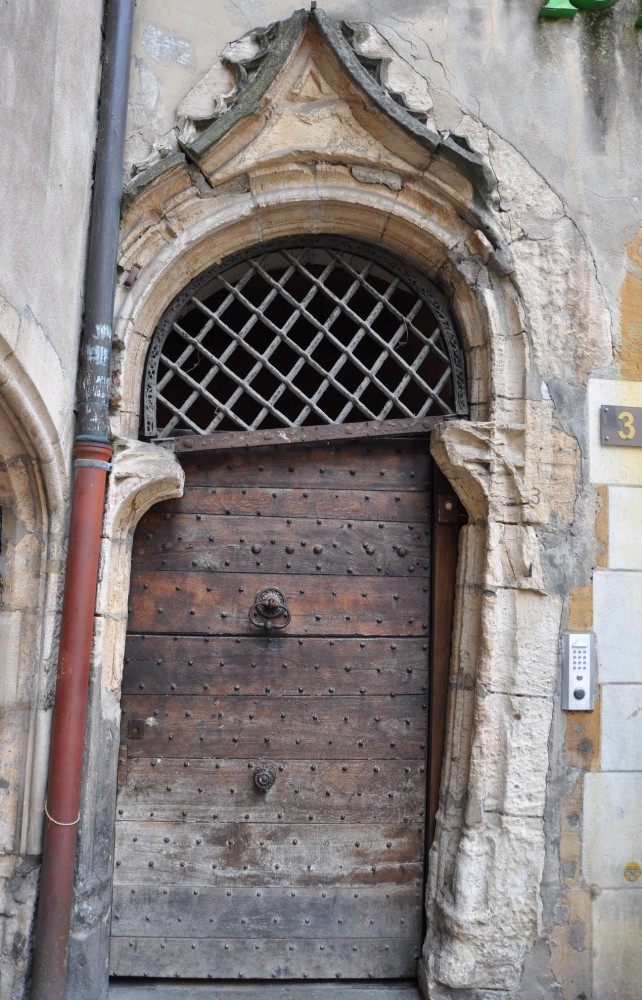


Vieux Lyon still bears the marks of this era. I invite you to discover them as you stroll around at your leisure, without forgetting to look up to observe all the details hidden in these facades steeped in history. From old Italian-inspired loggias to amusing signs, you can trace the history of Lyon…
Don’t miss the Saint Jean Cathedral, which was started in the 12th century. And if you want to discover the secrets of Old Lyon in more detail, I recommend booking a guided tour with the Tourist Office. There’s even a free tour if you get the Lyon City Card! (see “Practical tips” section)

Old Lyon traboules
Vieux Lyon is also known for its mysterious traboules, and I must admit that I found them fascinating! They are part of the best places to see in Lyon, and for sure one of the famous places to see in Lyon.
These passageways connect the two main streets of Old Lyon: Rue Saint-Jean and Rue du Bœuf. Built to avoid digging real streets in the neighborhood and thus save space in this area wedged between the Saône River and the hill, they are still used today by residents.
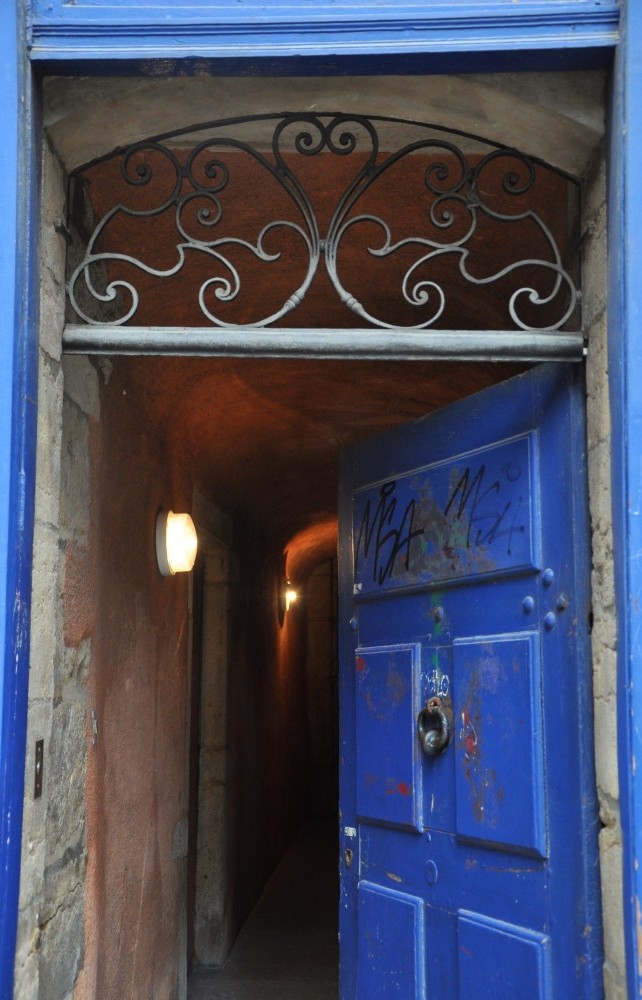
You will often find the doors closed, but dare to push them open to discover these hidden alleyways, while respecting the peace and privacy of the residents. Most are only open during the day, but let’s face it, when it’s dark outside, you don’t necessarily want to venture into these narrow passageways!

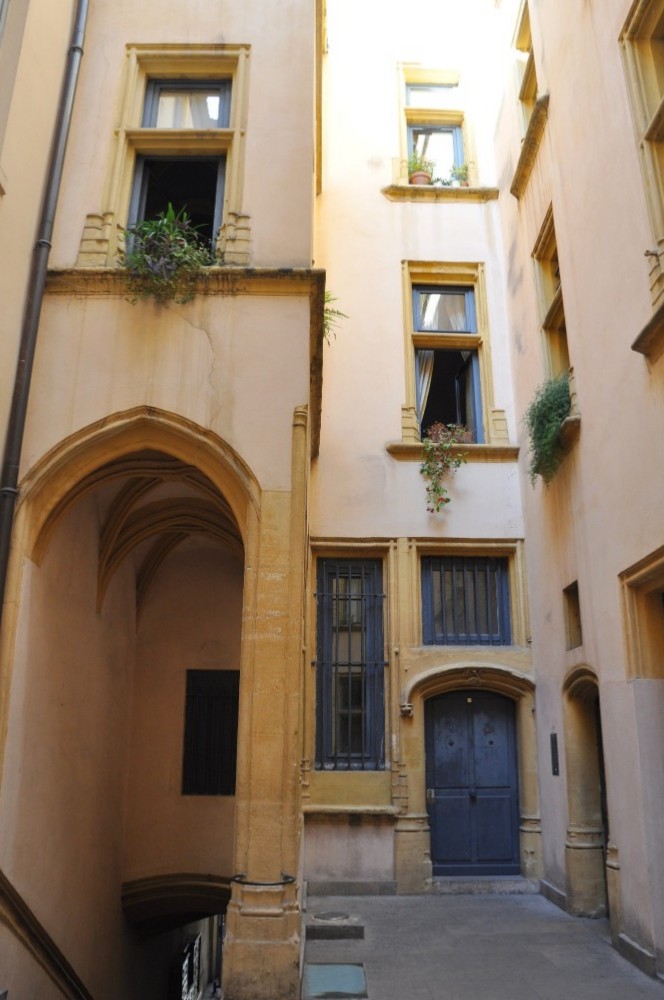
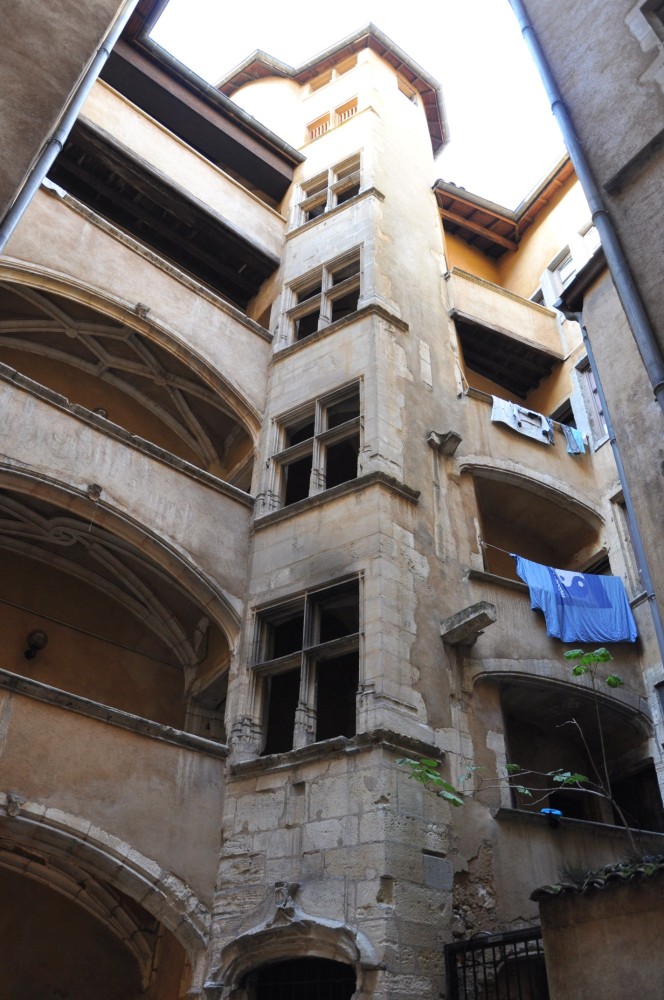
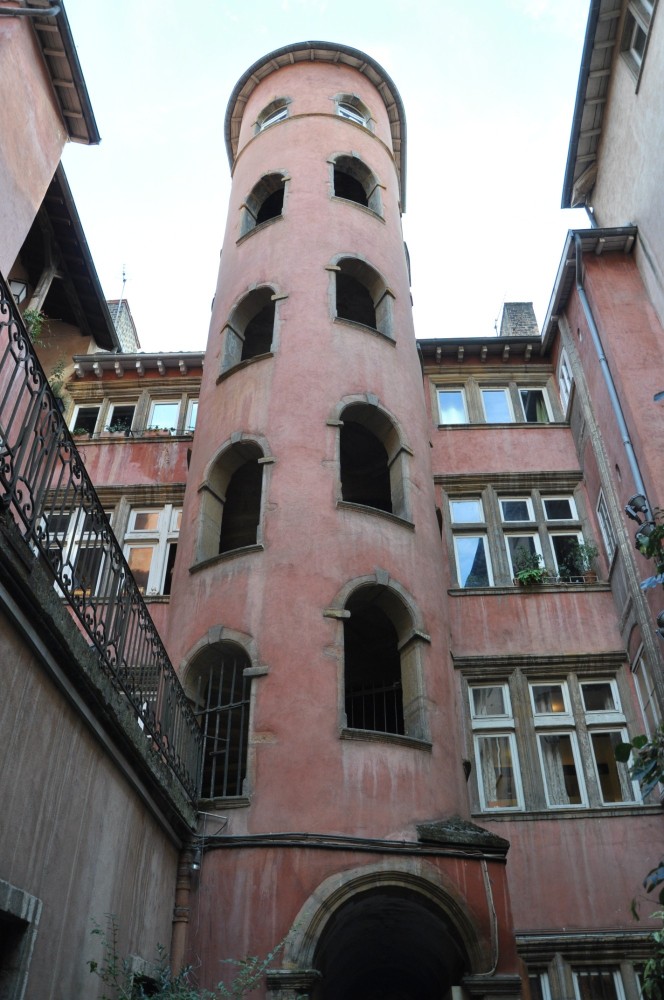
However, the interior is definitely worth a visit! Some are very colorful (always in shades of orange and red), while others hide beautiful inner courtyards. Lined with loggias or spiral staircases, the traboules have a distinctly Italian-inspired architecture.
Don’t miss the Longue Traboule, the Traboule du Gouverneur, all dressed in orange, and the one between 27 Rue Saint Jean and 6 Rue des Trois-Maries. Finally, check out the famous Tour Rose at 16 Rue du Bœuf. Its height is a testament to the wealth of its owner. In the past, people used to race to see who could build the tallest tower in the heart of Vieux Lyon!


VISIT THE MUSEUMS OF OLD LYON DISTRICT
The museums of Old Lyon offer an insight into the history of the city and its traditions. They are fascinating places and some of ht best places to see in Lyon! Here are three museums that I loved and recommend if you have some time during your weekend in Lyon.
Gadagne museum
This magnificent building, constructed in the 16th century by Florentine merchants, houses a fascinating museum dedicated to the 2,000-year history of the city. From its Roman origins to the modern city, through the explosion of the silk industry, the city has been a crossroads of trade, ideas, and cultures over the centuries. The museum also houses a rich collection of puppets, currently undergoing renovation.
Gadagne Museum: Wednesday to Sunday, 10:30 a.m. to 6:30 p.m., €6 (free for children under 18)

The Little Guignol Museum
The Little Guignol Museum pays tribute to this famous character born in Lyon! The museum is located at the back of the Guignol shop on Rue Saint Jean. It is a tiny family museum in its original setting, which displays numerous Guignol theaters, as well as the manufacture and birth of Guignol.
The puppets are actually made from lime wood. The pieces of wood are carved, polished, painted black for the eyes and red for the mouth, and finally decorated with a hat and a costume!

Even the story of Guignol is surprising and fascinating! Laurent Mourguet, Guignol’s creator, was an unemployed silk worker who became a tooth puller to support his family. To entertain his patients, he used the famous Polichinelle! He then invented Guignol to make a living from his craft, while his friend Father Thomas invented Gnafron, Guignol’s faithful companion, but also a cobbler who was a little too fond of Beaujolais wine.
I also discovered that Guignol’s creator was illiterate. His shows were mostly improvised, inspired by events from his own daily life: neighborhood stories, politics, and even naughty tales!
Petit Musée de Guignol: open every day from 10:30 a.m. to 6:30 p.m. except Monday mornings and during lunch, €5

The cinema museum
This fascinating museum brings together the two passions of its creator, Dan Ohlmann: movie sets and miniature scenes! I fell in love with this truly unusual museum, which will appeal to young and old alike!
The museum is spread over several floors of a typical old building in Vieux Lyon and features costumes, sets, masks, weapons, and more. All the pieces are real and were used in the filming of some of the greatest movies. In terms of sets, you’ll find the set from the movie Perfume, for example.

For cinema novices like me, it’s a real insight into the world of film, with explanations of special effects, mask making and set design. There’s something for everyone, with all kinds of films featured.
The rest of the tour takes us to discover the museum creator’s second passion: miniatures. His models reproduce everyday places and scenes on a tiny scale. The work is fascinating! It’s a painstaking task that begins with taking thousands of photographs of the real place to be reproduced. The miniaturist then draws up the plans and creates the micro-sculptures before assembling, coloring, and lighting their works. It’s a long process: the incredible reproduction of the Maxim’s restaurant in Paris, for example, took 15 months to complete!
Musée des Miniatures et du Cinéma: open every day from 10:00 a.m. to 6:30 p.m. (7:00 p.m. on weekends), €9 (€6.50 for children and students)

LA CROIX-ROUSSE, ONE OF THE MOST CHARMING PLACES TO SEE IN LYON
The Canuts Museum and the silk workshop
Another must-see for your weekend in Lyon is the Croix-Rousse, the hill of the Lyon silk workers! This is one of my favorite places to see in Lyon! This is the birthplace of the Lyon silk industry, where the silk workers lived and worked. The Croix-Rousse remains a fascinating neighborhood today!
I recommend discovering the epic story of the Lyon silk workers at the Musée des Canuts. It recounts the different processes involved in silk production, as well as the lives of the canuts, who have shaped the history of Lyon over the centuries. Imagine, at the end of the 18th century, silk was the livelihood of half the population of Lyon!

Even today, Lyon’s silk tradition lives on in Croix-Rousse. I highly recommend visiting the Atelier de la Soie, located at the bottom of the hill. The different stages of silk printing are explained and demonstrated by artisans.
It’s an impressive and colorful traditional skill that allows a simple piece of white silk to be transformed into a colorful scarf. I loved watching the artists at work!
Musée des Canuts: Monday to Saturday, 10:00 a.m. to 6:30 p.m., €2 – guided tour at 11:00 a.m. and 3:30 p.m. (€7.50), free with the Lyon City Card – Croix-Rousse metro station
Silk workshop: Monday to Friday, 9:30 a.m. to 1 p.m. and 2 p.m. to 6:30 p.m., Saturday, 9 a.m. to 1 p.m. and 2 p.m. to 6 p.m., free admission – Hôtel de Ville metro station


The traboules and street art of Croix-Rousse
Throughout your walk, you will discover that silk production has left its mark on the Croix-Rousse district, even in its architecture. The buildings on the slopes were designed especially for the canuts. The apartment-workshops had to be able to accommodate tall looms, and the windows were huge to let in light.
The famous Lyon traboules are also linked to the canuts. Unlike those in Vieux-Lyon, which are older, the traboules of Croix-Rousse connected the canuts’ buildings and protected the silk and fabrics that were transported through the streets. They also compensated for the slopes between the different terraces. The one in the Cour des Voraces is almost terrifying!


Lining the sloping alleys, the orange facades of the neighborhood will surprise you time and time again. If you like street art, you’ll be in for a treat during your weekend in Lyon!
Street art has taken over the Croix-Rousse and you’ll come across lots of little details in the streets. Look up: feet are sticking out of the walls, facades are brightly colored, and small stickers are stuck in the corners…
Croix-Rousse has become a lively and vibrant neighborhood, with a slightly bohemian and creative vibe. You can also explore the Passage Thiaffait, a village of creators that showcases young artists from Lyon.


THE BANKS OF THE SAÔNE RIVER AND ITS MURALS, ONE OF THE UNUSUAL PLACES TO SEE IN LYON
Now let’s head back down the hill of La Croix-Rousse to the banks of the Saône, one of the quietest and charming places to see in Lyon. I loved strolling along these charming quays, overlooked by beautiful colorful buildings reflected in the river. You’ll even come across some booksellers where you can stop for a rest.
Don’t miss the view from the Pont Bonaparte bridge, where the reflections in the water in the early morning are magical, with the Fourvière basilica proudly overlooking the city in the background!


I also invite you to discover one of the city’s most famous attractions: the painted walls of Lyon, one of the most unusual places to see in Lyon! Numerous frescoes cover the walls in the city center in the form of trompe-l’oeil. Some are gigantic, covering several hundred square meters! Most are close to the quays, so you’ll have no trouble finding them.
The Fresque des Lyonnais is undoubtedly the most famous. Painted in 1994, it covers several sides of a huge building. It pays tribute to all the famous people from Lyon who have made a name for themselves in a wide variety of fields. It features Abbé Pierre, the Lumière brothers, the great Paul Bocuse, and many others.


The pretty Bibliothèque de la Cité mural refers to printing, for which Lyon was the capital in the 15th century! A little further on, I also invite you to go and see the Mur des Canuts, which pays vibrant tribute to the entire history of silk production in Lyon.
These murals are all very colorful and realistic. I really liked this original way of telling the history and symbols of the city. Street art is definitely everywhere in Lyon! And it’s not over yet, because I’m taking you to Confluence…


THE CONFLUENCE DISTRICT, THE MOST MODERN PLACES TO SEE IN LYON
Now head to the southern tip of the peninsula, where the Rhône and Saône rivers finally meet. This is the Confluence district, one of the top places to see in Lyon! The former industrial wasteland has now been transformed into a contemporary and innovative neighborhood. Renowned architects have designed these astonishing and visionary buildings, which combine architectural, aesthetic, and ecological constraints.
This neighborhood is also home to the famous Musée des Confluences, which opened four years ago. It is renowned for its architecture, and I highly recommend taking a look inside. If you don’t want to visit, you can still enter the lobby to admire the interior, which is also worth seeing!
The museum was built by the famous Austrian firm Coop Himmelb(l)au in a deconstructivist style. The architecture consists of three parts: the base, the “cloud” of exhibition rooms, and the “crystal” of the entrance. Concrete, steel, and glass are elegantly intertwined. From the outside, you can admire the cantilevered structures, while inside, I was impressed by the feeling of lightness that emanates from the crystal.


I really liked the way the museum is showcased in its surroundings, at the precise point where the two rivers meet. From a distance, you could almost imagine a boat ready to set sail. I also really liked the collections inside!
A natural history and civilization museum, the Musée des Confluences houses a wide variety of collections, both historically and geographically. You can take a leap back in time to the appearance of life on Earth and into space with the discovery of all the continents.
The exhibitions are very well presented and appeal to both children and adults alike!
Musée des confluences: Tuesday to Friday 11 a.m. to 7 p.m., Saturday and Sunday 10 a.m. to 7 p.m., late night opening on Thursdays until 10 p.m., €9 (€5 for young people and students), free with the Lyon City Card – tram T1
Book your ticket for the Musée des Confluences


WHAT TO DO AROUND LYON?
If you have a little more than a weekend in Lyon, here are a few gems to discover in the surrounding area!
Pérouges (35 min): a little gem in the Ain department bordering the Rhône, Pérouges is a medieval town just the way I like them. Its old stones and the care taken by the inhabitants to maintain their village have an indescribable charm… Check out my 7 must-see attractions to discover the beautiful Ain department!
Les Pierres Dorées (40 min): this region of the Beaujolais is made up of vineyards and villages recognizable by their golden yellow stones. An example? The sublime village of Oingt, listed among the “most beautiful villages in France.” Discover it through my article dedicated to the 5 most beautiful villages of the golden stones of the Beaujolais
Beaujolais region (40 min): Known for its wines and châteaux, the Beaujolais region offers a stay rich in discoveries and flavors. If you’re planning a trip there soon, keep in mind that the end of November is Beaujolais Nouveau season!

If you also use Pinterest, follow me on this network: La Marinière en Voyage – and don’t forget to pin this article so you can find it easily!
